
- What is the Berlin Marathon elevation profile?
- The Berlin Marathon has 73 metres of total climbing and 79 metres of descent over 42.195 km (26.2 miles). The course is very flat, with 6 metres of net descent from start to finish.
- Where can I find the Berlin Marathon route map?
- This page includes a Berlin Marathon course map showing the full 42.195 km route from start to finish. The official course map is published at www.bmw-berlin-marathon.com/en/your-race/course/. Runs through Tiergarten, Potsdamer Platz, the Reichstag, Schöneberg, and Charlottenburg along wide boulevards.
- How long is the Berlin Marathon?
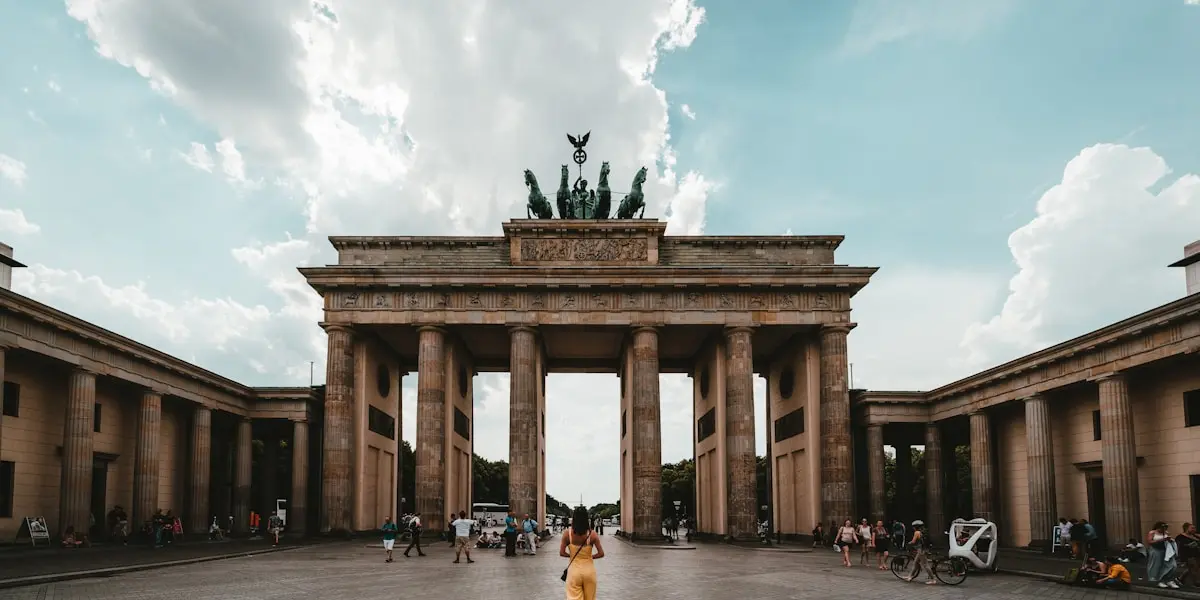
- The Berlin Marathon is the standard marathon distance of 42.195 kilometres (26.2 miles), certified to World Athletics rules. Starts and finishes at the Brandenburg Gate on Pariser Platz.
- What time does the Berlin Marathon start?
- The BMW Berlin Marathon typically starts in waves from 8:30 a.m. to 10:00 a.m. local time on the last Sunday of September. Exact wave assignments depend on estimated finish time and are confirmed closer to race day on bmw-berlin-marathon.com.
- Is the Berlin Marathon flat?
- Yes. The Berlin Marathon is one of the flattest World Marathon Majors, with only around 73 metres of total elevation gain over 42.195 km. The broad boulevards and minimal climbing make it a favourite for personal bests and world-record attempts.
- Why is the BMW Berlin Marathon often considered one of the world's fastest marathon courses?
- Berlin's course runs through the broad, straight boulevards of central Berlin with a total elevation gain of only around 73 metres over 42 km — effectively flat in every meaningful sense. Wide, smooth roads minimise lateral movement and congestion. Late September temperatures average 10–16 °C. Together, these factors have made Berlin the venue for more men's marathon world records than any other course, although the current men's world record (Sabastian Sawe, 1:59:30) was set at the 2026 London Marathon.
- What is the Berlin Marathon course route?
- The race starts on Straße des 17. Juni in the Tiergarten park and finishes through the iconic Brandenburg Gate onto Pariser Platz. The course winds through 12 districts including Mitte, Charlottenburg, Kreuzberg, and Tempelhof, passing the Reichstag, Potsdamer Platz, the East Side Gallery (a preserved section of the Berlin Wall), and Checkpoint Charlie. Running through the actual columns of the Brandenburg Gate to finish is one of the most emotionally charged moments in marathon running.
- How do I enter the Berlin Marathon?
- Entry is by lottery. Applications are accepted online for approximately 10 days in October or November, with results released the following January or February for that September's race. With roughly 130,000 applicants for ~46,000 spots, acceptance rates are around 35%. Charity entries and club allocations through national running federations offer alternative routes. Runners rejected from the lottery for multiple consecutive years may access a Guaranteed Entry option.
- When is the Berlin Marathon and what is its historical significance?
- Berlin Marathon is held on the last Sunday of September each year. The race has been run annually since 1974, but the current route through reunited Berlin dates from 1990 — the first edition to cross through the Brandenburg Gate, just one year after the fall of the Wall. That inaugural crossing of the Gate remains one of sport's most symbolic moments and is why the finish location carries such weight for runners today.
- What is the crowd atmosphere like at Berlin Marathon?
- An estimated one million spectators line the 42 km course, with bands, DJs, and samba groups stationed at regular intervals throughout. The finish at the Brandenburg Gate — running through the actual monument — is overwhelmingly emotional, and the Tiergarten park becomes a giant celebration zone for hours afterward. Berlin's finisher medal is famously heavy and elaborately designed, making it a particularly coveted item in any Six Star collection.