
- What is the London Marathon elevation profile?
- The London Marathon has 127 metres of total climbing and 161 metres of descent over 42.195 km (26.2 miles). The course is flat with minor bridges, with 34 metres of net descent from start to finish.
- Where can I find the London Marathon route map?
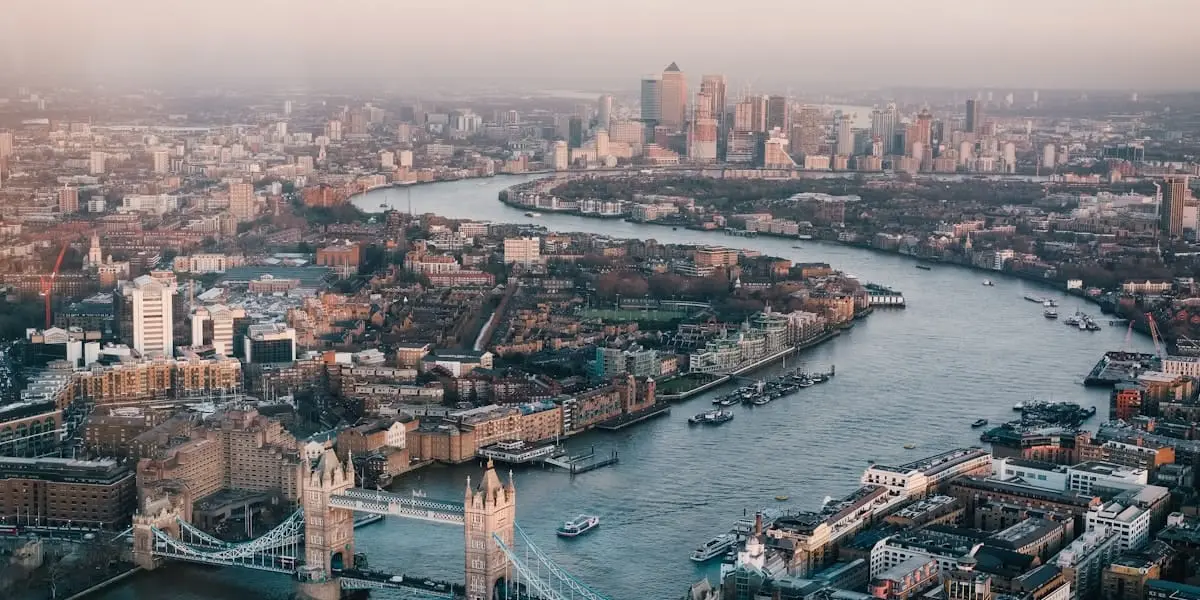
- This page includes a London Marathon course map showing the full 42.195 km route from start to finish. The official course map is published at www.londonmarathonevents.co.uk/london-marathon/participant-guide. Crosses Tower Bridge, passes the Cutty Sark and Canary Wharf, then follows the Thames Embankment and Westminster.
- How long is the London Marathon?
- The London Marathon is the standard marathon distance of 42.195 kilometres (26.2 miles), certified to World Athletics rules. From Blackheath and Greenwich Park to The Mall in front of Buckingham Palace.
- Is the London Marathon flat?
- Yes. The London Marathon is flat with minor bridges with 127 metres of total climbing over 42.195 km (26.2 miles) — a profile that suits runners chasing personal bests or Boston qualifying times.
- What time does the London Marathon start?
- The 2027 London Marathon starts at 9:30 am local time on Sunday, 25 April 2027. Arrive early for baggage drop and corral access — official race communications on www.tcslondonmarathon.com confirm any last-minute schedule changes.
- How do I get a place in the TCS London Marathon?
- There are four main routes. The public ballot opens each April after race day and closes within days — hundreds of thousands apply for roughly 17,000 ballot spots. Good for Age (GfA) entry guarantees a place to runners who have run under an age-graded standard (e.g. sub-3:05 for men 18–39, sub-3:45 for women 18–39) at a certified marathon within the qualifying window. Championship entries go to faster runners (sub-2:45 men, sub-3:15 women). Charity places are the most accessible route, with fundraising minimums typically starting around £2,000.
- What is the London Marathon course route?
- The course starts on Blackheath and Greenwich (split Red, Blue, and Green start pens that merge after a few miles), then follows the south bank of the Thames through Bermondsey. At the halfway point, runners cross Tower Bridge — the race's defining landmark — before looping into Canary Wharf (miles 17–19), doubling back along the north bank through Wapping and Embankment, and finishing on The Mall in front of Buckingham Palace. Total climbing is around 127 metres.
- How large is the London Marathon and what charity records has it set?
- London Marathon fields are approximately 50,000 finishers, making it one of the largest marathons in the world. It holds a Guinness World Record as the largest annual one-day fundraising event, having collectively raised over £1.4 billion for charity since 1981. Thousands of runners in elaborate costumes also compete annually, with Guinness records regularly broken for fastest runner dressed as a specific character.
- When is London Marathon and what should I expect weather-wise?
- London Marathon is held on a Sunday in late April — typically the last weekend of the month. April weather in London is unpredictable: average temperatures are 10–14 °C (50–57 °F), but the 2018 race saw extreme heat of 23 °C (73 °F) which caused record dropouts and prompted a major medical response. Wearing throwaway layers at the start and preparing for a wide range of conditions is strongly recommended.
- Are there wheelchair and elite races at London Marathon?
- Yes. London Marathon hosts one of the most competitive wheelchair races in the world, with a separate elite wheelchair start. Elite women race 45 minutes before elite men, and the elite fields typically include the world's best marathon runners. The mass waves follow in time-based corrals behind the elites. International runners from over 100 countries participate. The 2026 edition made history when Sabastian Sawe became the first man to break two hours in a record-eligible race (1:59:30) and Tigst Assefa set a new women's-only world record of 2:15:41.