
- Is the Chicago Marathon a Boston Qualifier?
- The Chicago Marathon is a Boston Qualifier. The Chicago Marathon holds a certified 42.195 km course that can be used for Boston Marathon qualifying times, subject to current Boston Athletic Association standards and the race's USATF (or equivalent) certification status in the registration year.
- What is the Chicago Marathon elevation profile?
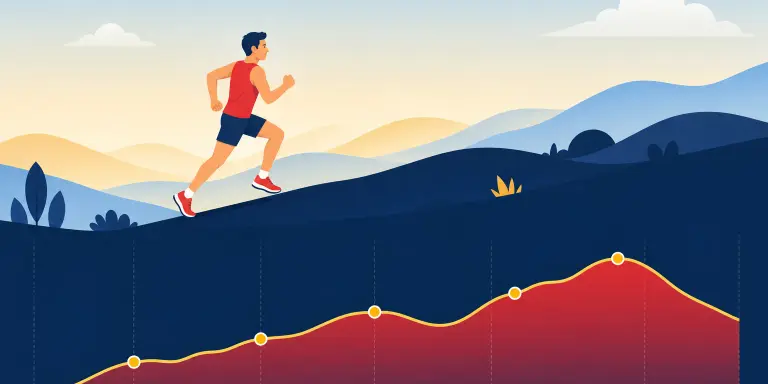
- The Chicago Marathon has 74 metres of total climbing and 73 metres of descent over 42.195 km (26.2 miles). The course is very flat, with 1 metres of net climb from start to finish.
- Where can I find the Chicago Marathon route map?
- This page includes a Chicago Marathon course map showing the full 42.195 km route from start to finish. The official course map is published at www.chicagomarathon.com/spectators/navigating-the-course/. Loop crosses the Chicago River several times and passes through 29 neighbourhoods including the Loop, Lincoln Park, Lakeview, and Pilsen.
- How long is the Chicago Marathon?
- The Chicago Marathon is the standard marathon distance of 42.195 kilometres (26.2 miles), certified to World Athletics rules. Urban loop starting and finishing in Grant Park on Lake Michigan.
- Is the Chicago Marathon flat?
- Yes. The Chicago Marathon is very flat with 74 metres of total climbing over 42.195 km (26.2 miles) — a profile that suits runners chasing personal bests or Boston qualifying times.
- What time does the Chicago Marathon start?
- The 2026 Chicago Marathon starts at 7:30 am local time on Sunday, 11 October 2026. Arrive early for baggage drop and corral access — official race communications on www.chicagomarathon.com confirm any last-minute schedule changes.
- What is the Bank of America Chicago Marathon course like?
- Chicago is a loop course starting and finishing in Grant Park on the Lake Michigan shoreline. The 26.2-mile route passes through 29 of Chicago's diverse neighbourhoods, including Lincoln Park, Wrigleyville, Pilsen, Chinatown, Bronzeville, and the South Loop. The course is famously flat — maximum elevation change is roughly 30 feet — with broad city streets and minimal sharp turns. Nearly every mile has crowd support from residents who treat it as a neighbourhood block party.
- How do I enter the Chicago Marathon?
- Chicago uses a lottery system that opens in late October or November and closes a few weeks later, with results announced by January. The field is approximately 45,000–50,000 runners. Alternative routes include the Bank of America Charity Programme (minimum fundraising commitments vary, typically $1,750–$3,500 per charity), a time-qualifier entry for runners with sub-3:00 (men) or sub-3:30 (women) marathons, and a Generosity Entry for those rejected from the lottery for multiple consecutive years.
- Has the Chicago Marathon hosted any world records?
- Yes — Chicago has hosted some of the most significant performances in marathon history. Ruth Chepngetich's all-time women's marathon record of 2:09:56 (set in a mixed-gender race with male pacers) was set here in 2024 and remains the fastest ever run by a woman. Kelvin Kiptum's previous men's world record of 2:00:35 was set on this course in 2023, before Sabastian Sawe broke two hours with 1:59:30 at London in 2026. Chicago's combination of flat terrain, massive pacing groups, large crowds, and cool October weather make it a premier venue for record-breaking performances.
- When is Chicago Marathon and what are the typical conditions?
- Chicago Marathon is held on the second Sunday of October. Temperatures typically range from 7 °C to 16 °C (45–60 °F) at race start — excellent running weather. However, Chicago's weather is famously variable: the 2007 race was cancelled mid-event due to heat reaching 27 °C (88 °F) with high humidity, triggering a major medical emergency. Runners should always prepare for the full range of Chicago autumn conditions.
- What should I know about the Grant Park start and finish area?
- Runners gather in Millennium Park and the surrounding Grant Park area near Cloud Gate ('The Bean') sculpture. Corrals are organised by estimated finish time (A through F), with elite women starting 20 minutes before elite men. Gear-check bags are transported to the finish area. Over 500 portable toilets are deployed at the start. After finishing, runners collect medals, Mylar blankets, and food boxes before accessing the post-race festival on Columbus Drive.