
California International Marathon
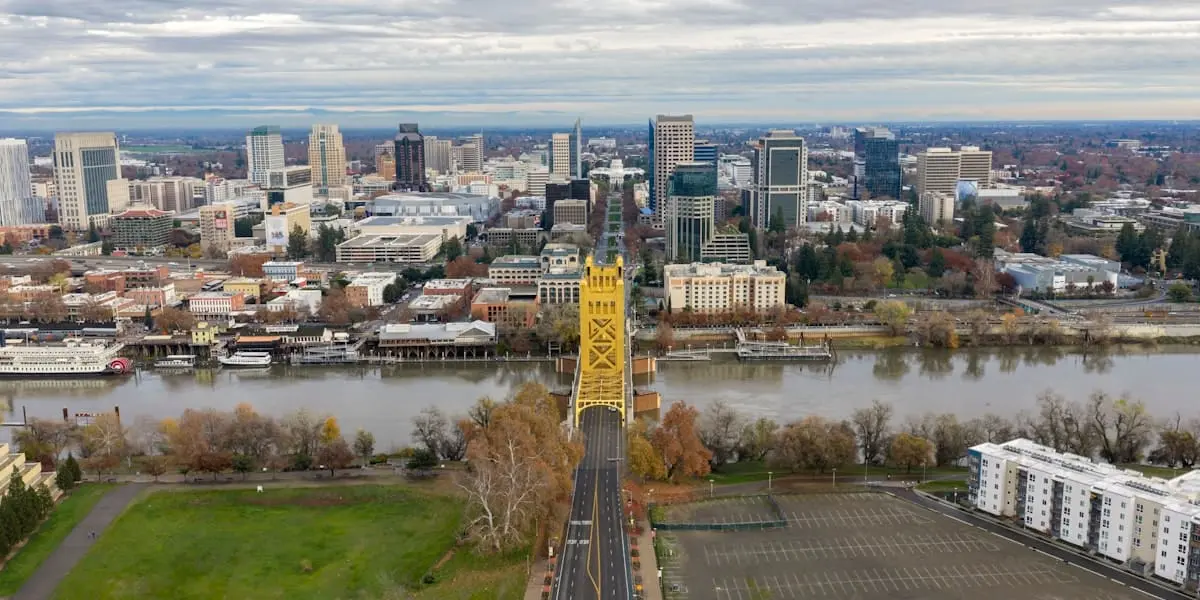
SacramentoCaliforniaUnited States
Next race
Sunday, 6 December 2026
7:00 am start
Distance
42.195 km / 26.2 mi
Point-to-point road
Elevation
Downhill · 202 m gain
202 m climbing
Race profile
Overview
The California International Marathon (CIM) draws around 8,200 finishers each December on a fast point-to-point road from Folsom to downtown Sacramento. The net-downhill course drops about 112 metres from the Sierra Nevada foothills before finishing on Capitol Mall near the California State Capitol. Cool early-December weather and a USATF-certified profile make it one of the most reliable Boston-qualifier races in the western United States.
- Typical participants
- Finishers: Approximately 8,200 per yearPlaces: Approximately 10k marathon places
- Weather
- Course records
- Men: 2:07:35 — Tsegay Weldlibanos (2024)Women: 2:24:09 — Molly Born (2025)
Course & terrain
California International Marathon course
The California International Marathon is a point-to-point road course from near Folsom Dam to Capitol Mall in Sacramento, running west through Orangevale, Fair Oaks, Carmichael and Arden-Arcade before entering the city on J Street and L Street. Rolling hills for the first 21 miles, then flat and fast for the last 5 miles, on a net-downhill profile. Crowds are strongest at the neighbourhood cheer zones, including Old Town Fair Oaks and the halfway point, and along L Street to the Capitol Mall finish.
California International Marathon route map
- Elevation
Downhill · 202 m gain — approx. 9 m above sea level
↑ 202 m · ↓ 314 m · net −112 m
California International Marathon GPX file
Download the California International Marathon GPX file
Marathon Focus' proprietary GPX processing removes duplicate points, adds elevation data, and formats the file so you get a cleaner, more reliable route to load into your Garmin, Coros, or Apple Watch fitness watch.
Registration
California International Marathon entry requirements
The California International Marathon (CIM) has no qualifying time for general entry (only the elite championship field and the seeded start have time standards). Registration usually opens in December, soon after the previous race, with first-come entries in three price tiers that differ in whether a place can be transferred or deferred. Recent editions have sold out quickly at every tier; charity-donation entry and a random draw sometimes follow the general sell-out. After sell-out, routes can include official bib transfer or a two-person relay team. Entries are non-refundable.
Flights and accommodation
California International Marathon travel
Flights to Sacramento
Airports closest to Sacramento for flight planning and race-week travel.
- Closest airport
Hotels in Sacramento
Ad · We earn a commission if you book through these links, at no cost to you.
Before the race
California International Marathon race weekend
Expo and bib pickup
- Where
- SAFE Credit Union Convention Center, 1400 J Street, Sacramento (Hall D)
- When
Friday and Saturday before race Sunday
- Friday 1:00 pm to 7:00 pm
- Saturday 9:00 am to 5:00 pm
- What to bring
- Government-issued photo ID and registration QR code
- Race-day pickup
- Not available
- Proxy pickup
- Allowed with your QR code, a copy of your photo ID and the authorisation details listed in the final instructions
On the day
California International Marathon race day
Cut-offs
From the gun.
- Race startsStart time: 7:00 am
- Overall time limitCut-off time: 6 hours
Race footage
California International Marathon videos
Race-day footage from the course to help you picture the route, crowds, and key landmarks on marathon day.
California International Marathon (CIM)
CIM course preview
Common questions
Frequently Asked Questions
- What is the California International Marathon (CIM), and how does it relate to Sacramento?
- The California International Marathon, known as CIM, is organised by the nonprofit Sacramento Running Association. It is a point-to-point race that starts near Folsom Dam and finishes on Capitol Mall in downtown Sacramento, running 42.2 km westward with the net drop in its favour.
- How much does the CIM course drop in elevation?
- The CIM course drops about 112 metres (366 feet) net from the Folsom start to the Sacramento finish. Rolling hills for the first 21 miles, then flat and fast for the last 5 miles, which makes it one of the most reliably fast courses in the country, and the drop is still within the Boston Marathon's limits, so qualifying times need no adjustment.
- Why is CIM considered one of the best Boston Qualifier races in the US?
- CIM has a near-legendary reputation as a BQ race, and the organiser reports a Boston-qualifying rate above 30 per cent. The net-downhill point-to-point course, cool early-December mornings, a large and competitive field with pace teams, and USATF certification combine to make it one of the top choices for runners targeting a BQ in any given year.
- When is the California International Marathon held?
- The California International Marathon is held on a Sunday in early December, usually the Sunday closest to 5 December, making it one of the last major US marathons of the calendar year and a prime target for runners who missed their BQ in spring or autumn. The mass start is in the early morning.
- What is the route of the California International Marathon?
- The race starts near Folsom Dam in the historic Gold Rush city of Folsom, just east of Sacramento, and runs west on closed roads through Orangevale, Fair Oaks and Carmichael, mostly along Fair Oaks Boulevard. It enters the city on J Street and L Street and finishes on Capitol Mall, a few blocks from the California State Capitol.
- Is there a time limit for the California International Marathon?
- Yes. The marathon has a 6-hour limit (about 13:44 per mile). The start line closes at 7:30 am, roads reopen behind a pace vehicle at that pace, and the finish closes at 1:30 pm; buses carry runners who fall behind to the finish.
Official resources
California International Marathon links
Websites
Social Media
If you see something that looks out of date, please send us a note. Last reviewed 21 November 2026.
Close to this race
Nearby Marathons
Other races closest to Sacramento.


Planning guides
Related guides
Practical guides to help you plan, train for, and run this race.

Marathon Course Profiles Explained
What flat, rolling, and hilly really mean — and how to read elevation gain, net change, and altitude on a marathon course.

Marathon Entry: Ballots, Charity & Open Registration
How major marathons allocate places — open entry, ballots, charity bibs, tour operators, and what to check before you commit to a trip.

Marathon Weather: What to Expect
How temperature, humidity, wind, and rain affect marathon performance — and how to use typical race-day weather when choosing a start line.