
San Diego Marathon
San DiegoCaliforniaUnited States
Next race
Sunday, 6 June 2027
6:00 am start
Distance
42.195 km / 26.2 mi
Scenic coastal road
Elevation
Downhill · 247 m gain
247 m climbing
Race profile
Overview
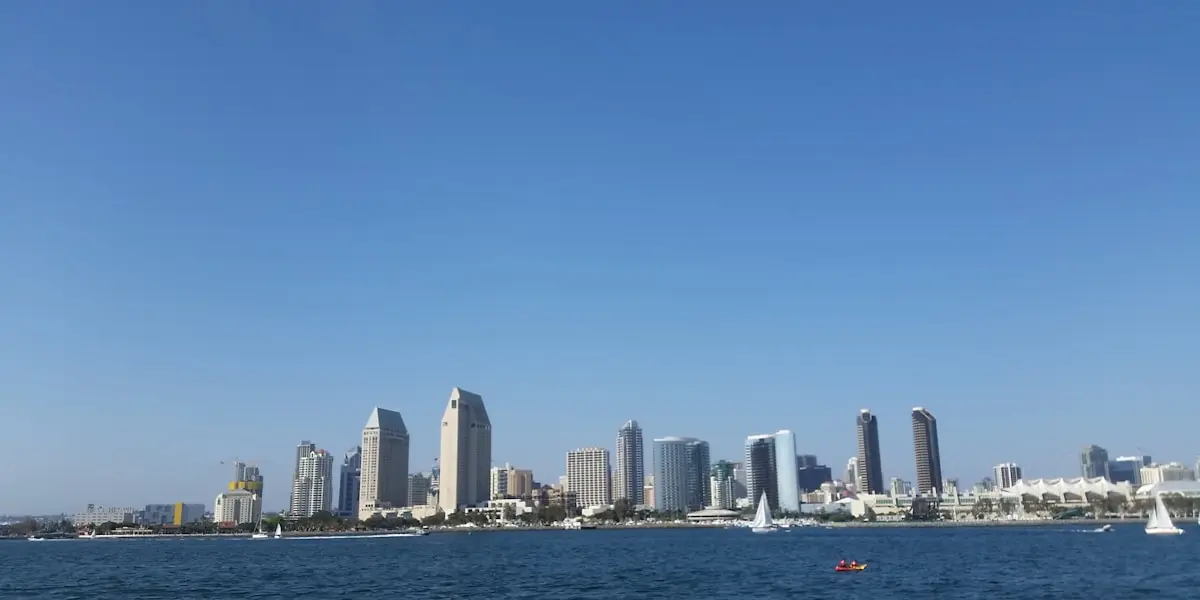
The San Diego Marathon draws approximately 4,800 finishers on a scenic coastal road in San Diego, United States. The course starts and finishes in Balboa Park. Mostly flat with gentle rises inland from the coast.
- Typical participants
Approximately 4,800 finishers
- Weather
- Course records
- Men: 2:08:33 — Philip Tarus (1999)Women: 2:23:31 — Bizunesh Deba (2011)
Course & terrain
San Diego Marathon course
The San Diego Marathon is a coastal city loop starting and finishing in Balboa Park, passing Mission Bay, SeaWorld, and La Jolla with Pacific Ocean views throughout. The bayfront and coastal flats are the easiest because the terrain stays mostly level, while the short rises around La Jolla and the more exposed coastal roads are tougher when the breeze builds. Spectator support is strongest in Balboa Park, around Mission Bay, and along the La Jolla finish approach.
San Diego Marathon route map
- Elevation
Downhill · 247 m gain — approx. 20 m above sea level
↑ 247 m · ↓ 318 m · net −71 m
Registration
San Diego Marathon entry requirements
The San Diego Marathon (Rock 'n' Roll Running Series) uses open registration on the official website with no ballot or qualifying standard. Entries for the June race remain available through tiered pricing periods. Charity bibs are offered through official series partners for runners seeking a fundraising route.
Flights and accommodation
San Diego Marathon travel
Flights to San Diego
Airports closest to San Diego for flight planning and race-week travel.
- Closest airport
Hotels in San Diego
Ad · We earn a commission if you book through these links, at no cost to you.
Race footage
San Diego Marathon videos
Race-day footage from the course to help you picture the route, crowds, and key landmarks on marathon day.
2017 Rock 'n' Roll San Diego Marathon & 1/2 Marathon Course Spotlight
Common questions
Frequently Asked Questions
- Does the San Diego Rock 'n' Roll Marathon pass through Balboa Park?
- Yes. Balboa Park — San Diego's celebrated 1,200-acre cultural park — features prominently on the course, with runners enjoying tree-lined paths past the Park's Spanish Colonial Revival architecture and world-famous zoo entrance.
- Is the San Diego Marathon a coastal course?
- Yes. The course takes runners through coastal neighbourhoods including Mission Bay and the waterfront, with ocean views and sea breezes that make it one of the most scenically rewarding marathon routes in the US.
- What is the weather like at the San Diego Rock 'n' Roll Marathon in June?
- June in San Diego brings the famous 'June Gloom' — a marine layer that keeps temperatures cool, typically 14–20 °C, with overcast skies in the morning that often burn off by mid-race. These conditions are generally excellent for running and far cooler than inland California cities in summer.
- Is the San Diego Rock 'n' Roll Marathon one of the original Rock 'n' Roll events?
- Yes. San Diego hosted the very first Rock 'n' Roll Marathon in 1998, making it the founding event of what became the largest running series in the world. Its legacy of live bands at every mile and a big finish-line concert helped define the Rock 'n' Roll brand.
- Is the San Diego Marathon a good course for a personal best?
- The course has around 247 metres of climbing but a net drop of about 71 metres, and the cool coastal June temperatures make it a solid option for many runners. The second half is generally faster, and the coastal scenery helps distract from the effort.
Official resources
San Diego Marathon links
Websites
Social Media
If you see something that looks out of date, please send us a note. Last reviewed 11 October 2026.
Close to this race
Nearby Marathons
Other races closest to San Diego.


Planning guides
Related guides
Practical guides to help you plan, train for, and run this race.

Marathon Course Profiles Explained
What flat, rolling, and hilly really mean — and how to read elevation gain, net change, and altitude on a marathon course.

Marathon Weather: What to Expect
How temperature, humidity, wind, and rain affect marathon performance — and how to use typical race-day weather when choosing a start line.

How to Choose a Marathon
Pick a race that fits your goal — a PB, a city weekend, atmosphere, or a major — using course data and honest expectations.