
Tel Aviv Marathon
Tel AvivIsrael
Next race
Friday, 26 February 2027
6:30 am start
Distance
42.195 km / 26.2 mi
Urban coastal road
Elevation
Rolling · 100 m gain
100 m climbing
Race profile
Overview
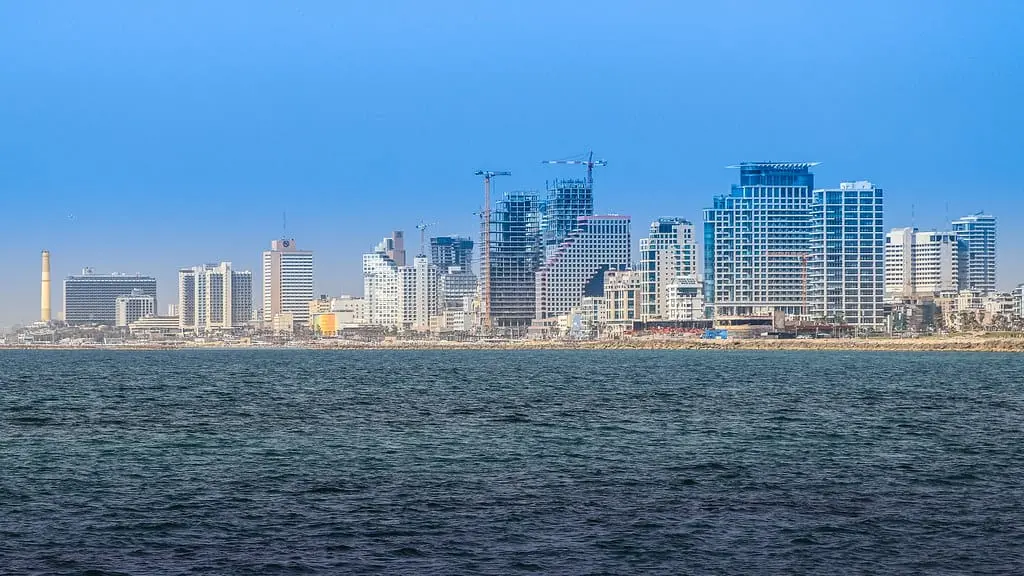
The Tel Aviv Marathon draws about 7,000 finishers each February through Israel's Mediterranean coastal capital. The course passes the Tel Aviv Port, the Bauhaus White City, and the beachfront promenade (tayelet) with sea views. February mild Mediterranean weather and a flat coastal profile make it the largest marathon in Israel.
Tel Aviv Marathon is a certified 42.195 km (26.2 mile) marathon — the standard World Athletics marathon distance.
- Typical participants
Approximately 7,000 finishers
- Weather
- Course records
- Men: 2:10:11 — Dominic Kipngeno Mibei (2023)Women: 2:35:20 — Baraki Gebriala (2026)
Course & terrain
Tel Aviv Marathon course
Course route details and elevation profile for race-week planning.
The Tel Aviv Marathon is a Mediterranean loop starting and finishing at Tel Aviv Port, following the tayelet promenade past Rabin Square, the White City Bauhaus district, and Jaffa. The coastal promenade miles are the easiest because they stay flat beside the sea, while the denser urban transitions and any Mediterranean wind make the return leg tougher. Spectator support is strongest at Namal Tel Aviv, along the tayelet, and around Rabin Square.
The Tel Aviv Marathon course is rolling over 42.195 km (26.2 miles). Runners cover 100 metres of climbing and 95 metres of descent, with a net climb of 5 metres from start to finish.
- Elevation
Rolling · 100 m gain — approx. 5 m above sea level
↑ 100 m · ↓ 95 m · net +5 m
Registration
Tel Aviv Marathon entry requirements
The Tel Aviv Marathon uses open registration at telavivmarathon.co.il with no ballot or qualifying time. Sign-up for the February race typically opens the previous autumn. With around 7,000 finishers, it is Israel's largest marathon and early registration is advisable.
Getting there
Tel Aviv Marathon travel
Airports closest to Tel Aviv for flight planning and race-week travel.
- Closest airport
Ben Gurion International Airport (TLV)
13 km / 8 mi
Race footage
Tel Aviv Marathon videos
Race-day footage from the course to help you picture the route, crowds, and key landmarks on marathon day.
Tel Aviv Walk | The Day Before the War | From Rothschild to Carmel Market [4K]
Common questions
Frequently Asked Questions
- What is the Tel Aviv Marathon elevation profile?
- The Tel Aviv Marathon has 100 metres of total climbing and 95 metres of descent over 42.195 km (26.2 miles). The course is rolling, with 5 metres of net climb from start to finish.
- How long is the Tel Aviv Marathon?
- The Tel Aviv Marathon is the standard marathon distance of 42.195 kilometres (26.2 miles), certified to World Athletics rules. Urban coastal road starting and finishing at the Tel Aviv Port (Namal Tel Aviv).
- What time does the Tel Aviv Marathon start?
- The 2027 Tel Aviv Marathon starts at 6:30 am local time on Friday, 26 February 2027. Arrive early for baggage drop and corral access — official race communications confirm any last-minute schedule changes.
- Where does the Tel Aviv Marathon finish?
- The finish is at the Tel Aviv Port (Namal) on the Mediterranean waterfront.
- Does the Tel Aviv Marathon follow the beach?
- Yes. The tayelet beachfront promenade is a major section of the course with sea views.
- When is the Tel Aviv Marathon?
- The race is held in February.
- Is the Tel Aviv Marathon flat?
- Largely yes along the coastal promenade.
- What is Tel Aviv weather in February?
- February is mild, typically 12–18 °C (54–64 °F), with Mediterranean spring conditions.
Official resources
Tel Aviv Marathon links
Websites
Last updated 11 October 2026. Edition dates and course details are reviewed regularly.
Close to this race
Nearby Marathons
Other races closest to Tel Aviv.



RiyadhSaudi Arabia· 1,421 km away
Riyadh Marathon
Riyadh's multi-distance marathon festival, based at Princess Nourah bint Abdulrahman University. The official 2026 routes include a 42.195 km marathon, half marathon, 10 km and 5 km; the longer races use northern Riyadh roads and the shorter races stay on university roads. The 2027 date remains to be announced.
ThessalonikiGreece· 1,422 km away
Alexander the Great Marathon
The Alexander the Great Marathon draws approximately 2,000 finishers each April on a point-to-point road in Thessaloniki, Greece. The finish on Thessaloniki's waterfront is the marathon's signature moment. The route passes Macedonian plain roads and ends beside the Thermaic Gulf promenade. Gentle undulations are the only breaks on an otherwise flat profile.
Next race: Sunday, 4 April 2027
Planning guides
Related guides
Practical guides to help you plan, train for, and run this race.

Marathon Course Profiles Explained
What flat, rolling, and hilly really mean — and how to read elevation gain, net change, and altitude on a marathon course.

Marathon Weather: What to Expect
How temperature, humidity, wind, and rain affect marathon performance — and how to use typical race-day weather when choosing a start line.

How to Choose a Marathon
Match a race to your goals — personal bests, sightseeing, atmosphere, or a major milestone — using course data and realistic expectations.